

The Indispensable Food Enhancer of Mediterranean Diets and the Main Feature of Our Tables: Olive Oil
Olive oil is a vegetable oil obtained from olives, the fruit of the olive tree. The cultivation of olive trees, olive harvesting and olive oil production are linked to the history and culture of some of the oldest Mediterranean civilizations.
Today, olive oil is still produced and consumed mainly in countries around the Mediterranean. Approximately 70% of its production comes from Mediterranean countries around the world. The largest producer of olive oil is Spain, followed by Greece, Italy, Turkey, Morocco and Tunisia. The countries with the highest annual consumption of olive oil per capita are Greece (12 kg), Spain (11.7 kg), Italy (8.2 kg) and Portugal (7.9 kg). Northern Europe and North America consume much less, but their consumption of olive oil is steadily increasing.
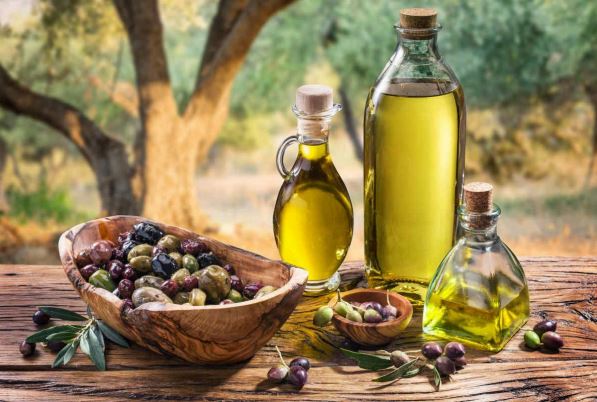
Olive oil is obtained by pressing and crushing olives and separating the oil through physical or chemical processes. Olive oil must be processed exclusively by mechanical or other physical means, especially under thermal conditions, which do not lead to changes in the oil, such as washing, decantation, centrifugation.
If olive oil is obtained under conditions that do not undergo any processing other than filtering, it is called extra virgin olive oil. This production technique ensures the transfer and preservation of bioactive components, including polyphenols, from the olive to the olive oil. The historical key role of olive oil is that it has long been a staple of the diet of the Mediterranean population and is part of the Mediterranean diet.
Indeed, the available evidence on olive oil and its beneficial health effects has been attributed to both its specific composition (fatty acids profile and phenolic compounds) and its consumption in the context of the Mediterranean diet. Regarding the nutritional profile, the main components of olive oil are fatty acids (98-99%) with a predominance of MUFA (55.3-86.5%; oleic acid and palmitoleic acid), followed by polyunsaturated fatty acids (PUFA) (3.5-21%; oleic acid and palmitoleic acid). linoleic and linolenic acids) and saturated fatty acids.

There are many positive studies on the antioxidant and anti-inflammatory effects of olive oil, improvement in endothelial function and lipid profile, prevention of obesity, diabetes, cardiovascular and neurodegenerative diseases, and modulation of the intestinal microbiota.
It constitutes the nutritional composition of olive oil, which contains compounds such as high levels of monounsaturated fatty acids (MUFA) (especially oleic acid) and polyphenols (oleuropein and hydroxytyrosol).
Looking at long-term studies conducted in 2020, it is observed that olive oil intake in daily nutrition increases weight loss. At the same time, it is among the issues discussed by experts that 30 mL of olive oil taken daily may be sufficient to maintain the weight lost.
While olive oil has positive responses in the fight against cancer with its polyphenols and antioxidant properties, its use for treatment purposes in infectious diseases is also quite common and important.
So how should we use olive oil for health? Extra-purified extra virgin olive oil, in particular, is added in appropriate amounts to cold appetizers and salads, not during but after cooking. Olive oil used for hot dishes is kept in a separate spot.
It is important to minimize the loss of antioxidant compounds by preserving and keeping the roasting point with vegetables for a minimum time.
Refference: Specialist Dyt. Ayça ÇELEBİ ACUNGAN
Date:2024